SMART GROWING. LIFE, CLOSER.

The future
grows
here.

From garden to plate, without going around the world. Grow with water that returns and technology that works alongside you.

MADRID · SINCE 2019
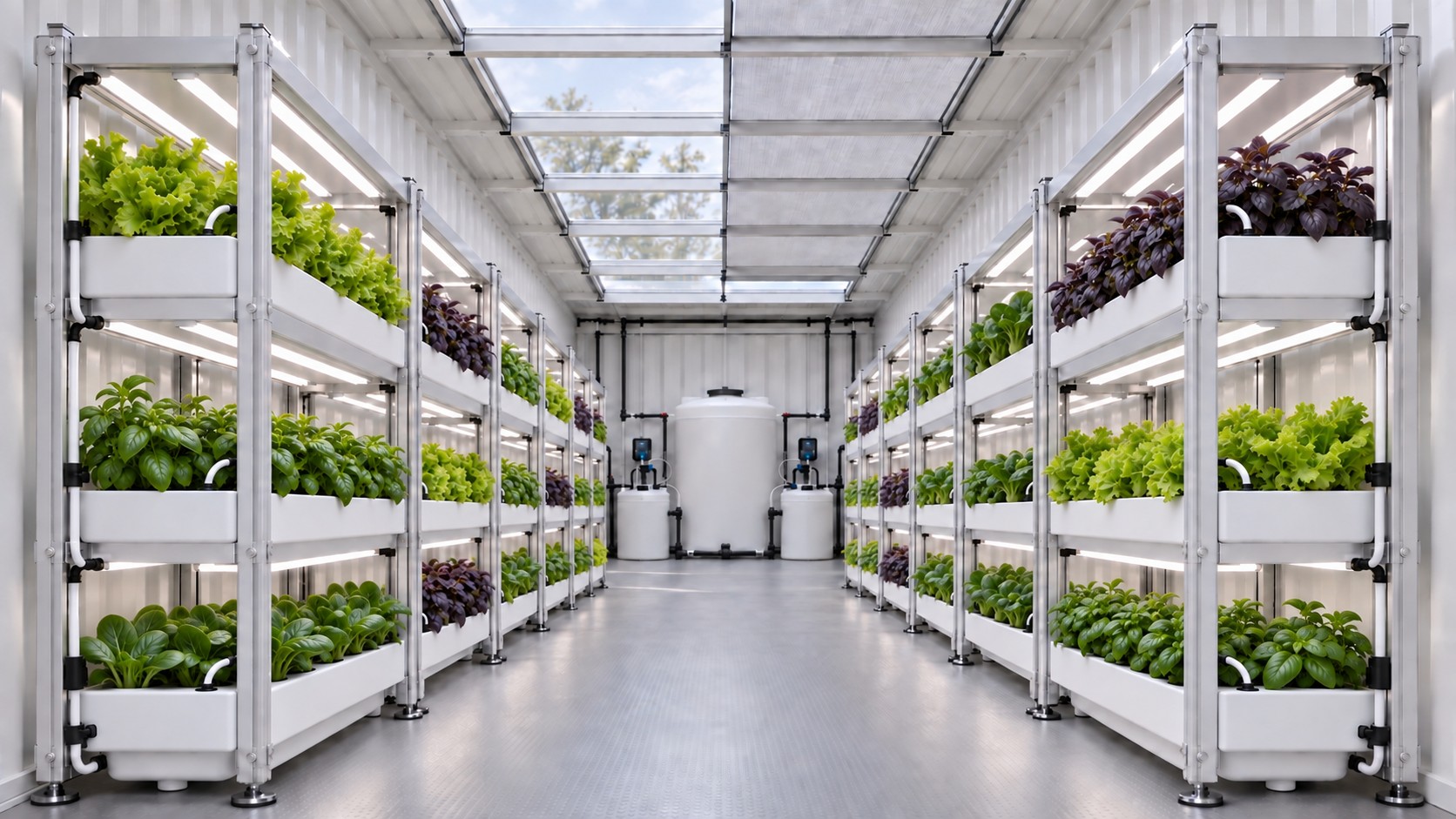
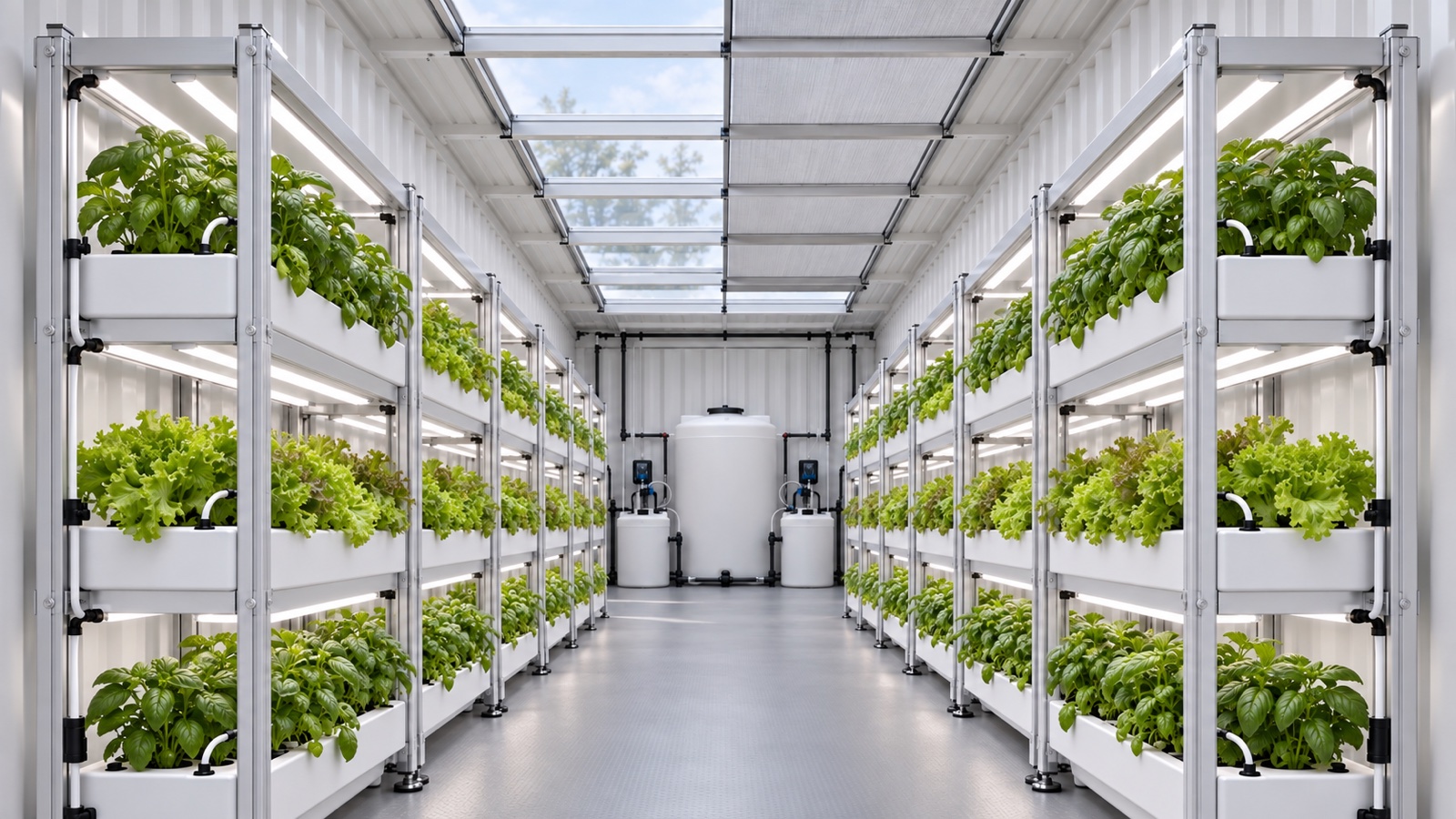
Container interior growing lettuce, green and purple basil, and pak choi.
Water comes back.

What is not absorbed is reused.
EVERY DROP HAS A FUTURE

Grow with less water.

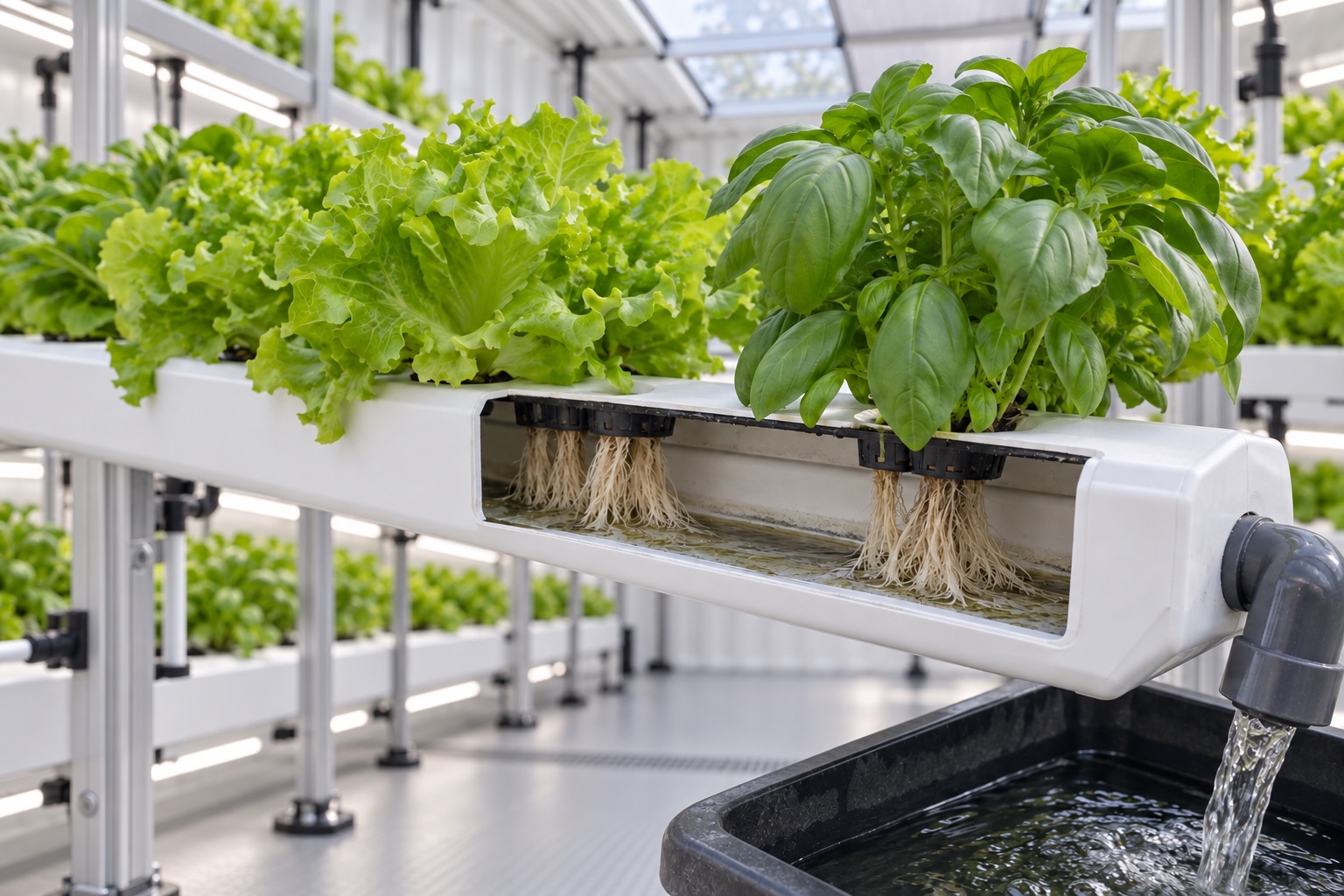
It nourishes the roots, returns to the reservoir and starts again. Keeping water in circulation means growing with less — and caring for what the next harvest will need.

85–95%

less water1

Closed hydroponics vs. soil cultivation · sector reference range

Conceptual view of hydroponic crops, roots and water returning to a reservoir.
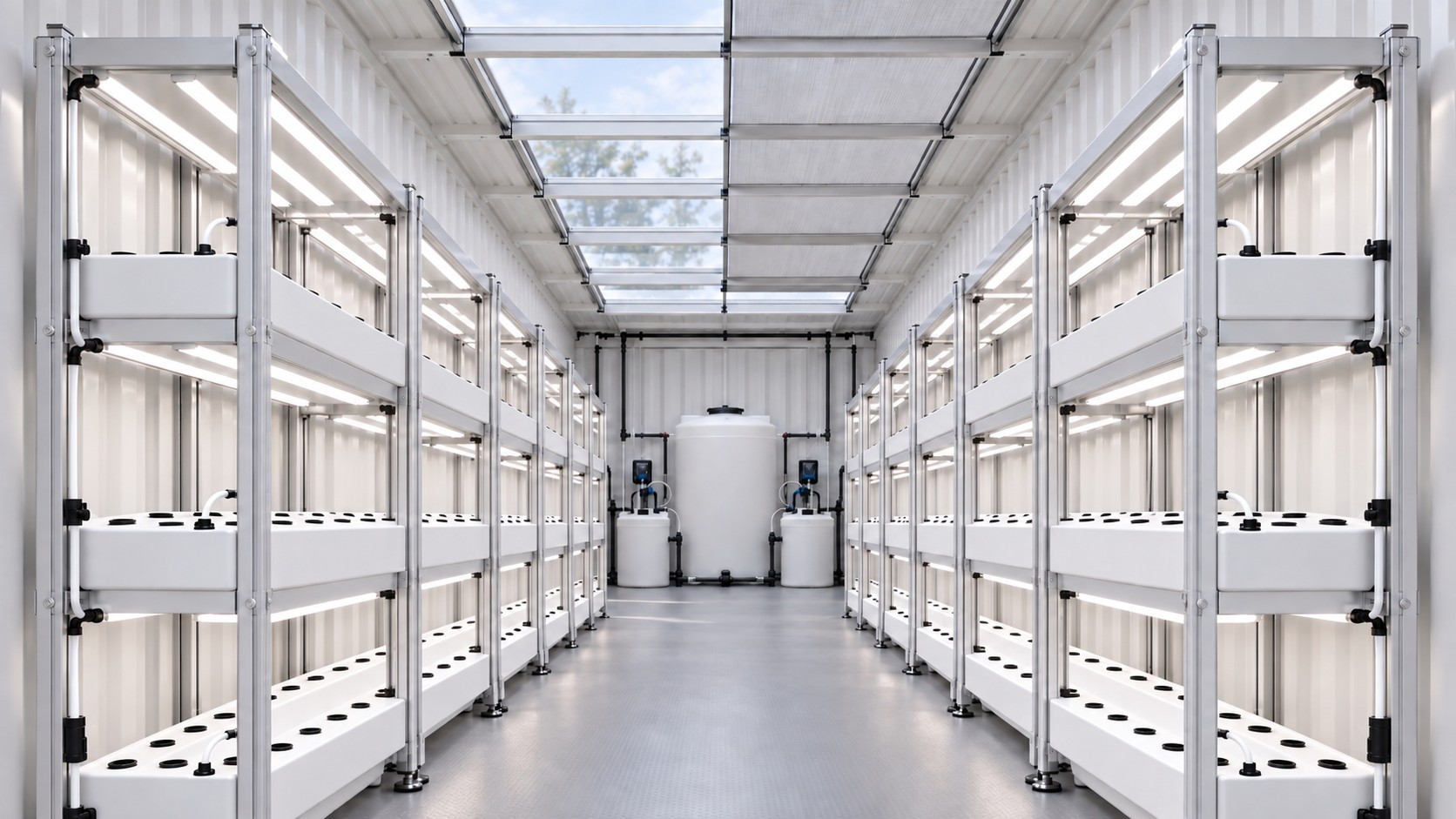
Empty system
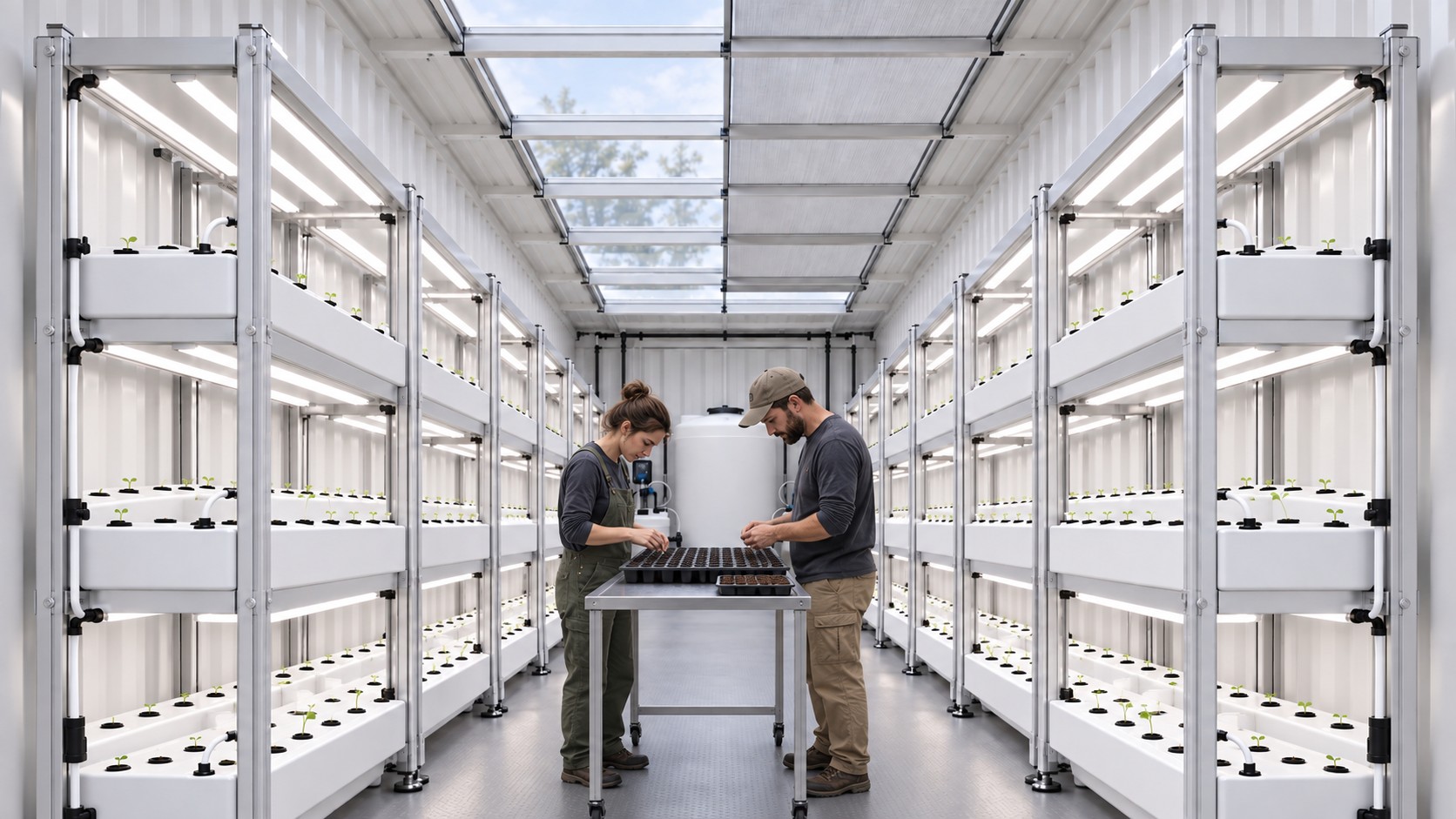
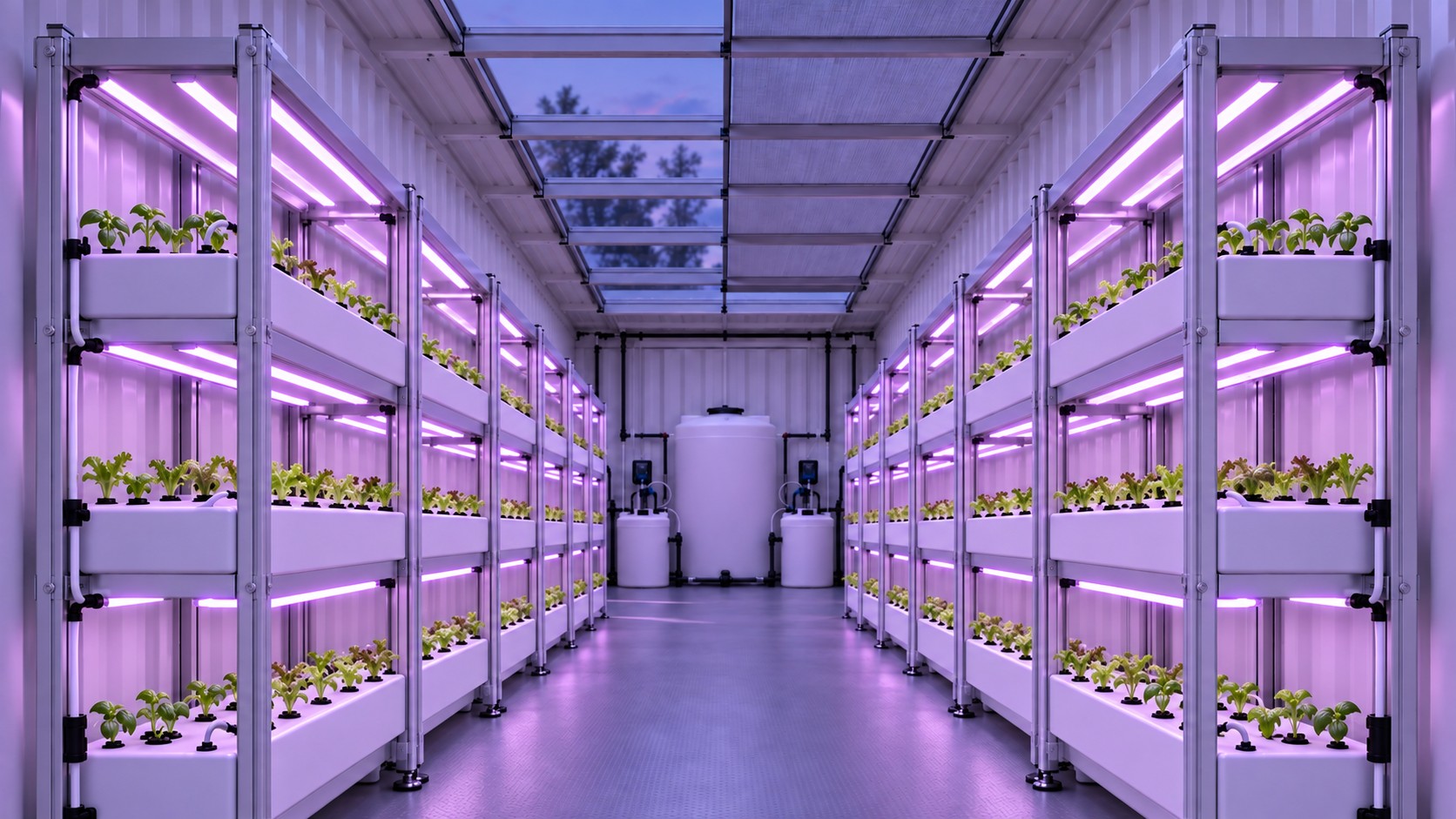
From seed to harvest

Empty system

Why it matters

≈70% of the world's fresh water goes to agriculture.2

Spain is among the most water-stressed countries in Europe, with aquifers emptying faster than they recharge.3

How we measure it →

About these figures

Closed-loop hydroponics vs. growing in soil

The system's starting point, not a promise of ours.1

Sector reference range. Huertify unit performance is measured and published separately.

CLOSED LOOPSOIL-FREE GROWINGOUR OWN SOFTWAREDESIGNED TO BE REPAIRED

The garden, ten metres from your plate.

Soil-free growing in a closed loop that runs almost by itself: the software handles irrigation, climate, stock and harvest. For homes, restaurants, growers and villages — and to bring fresh vegetables to those who no longer have them nearby.

SOFTWARE Engineering Deck · runs itself GROWING 4 systems · leaf→tuber H₂O −85…−95% LOOP closed

The value isn't the box, it's the software that runs it. How the Engineering Deck works →

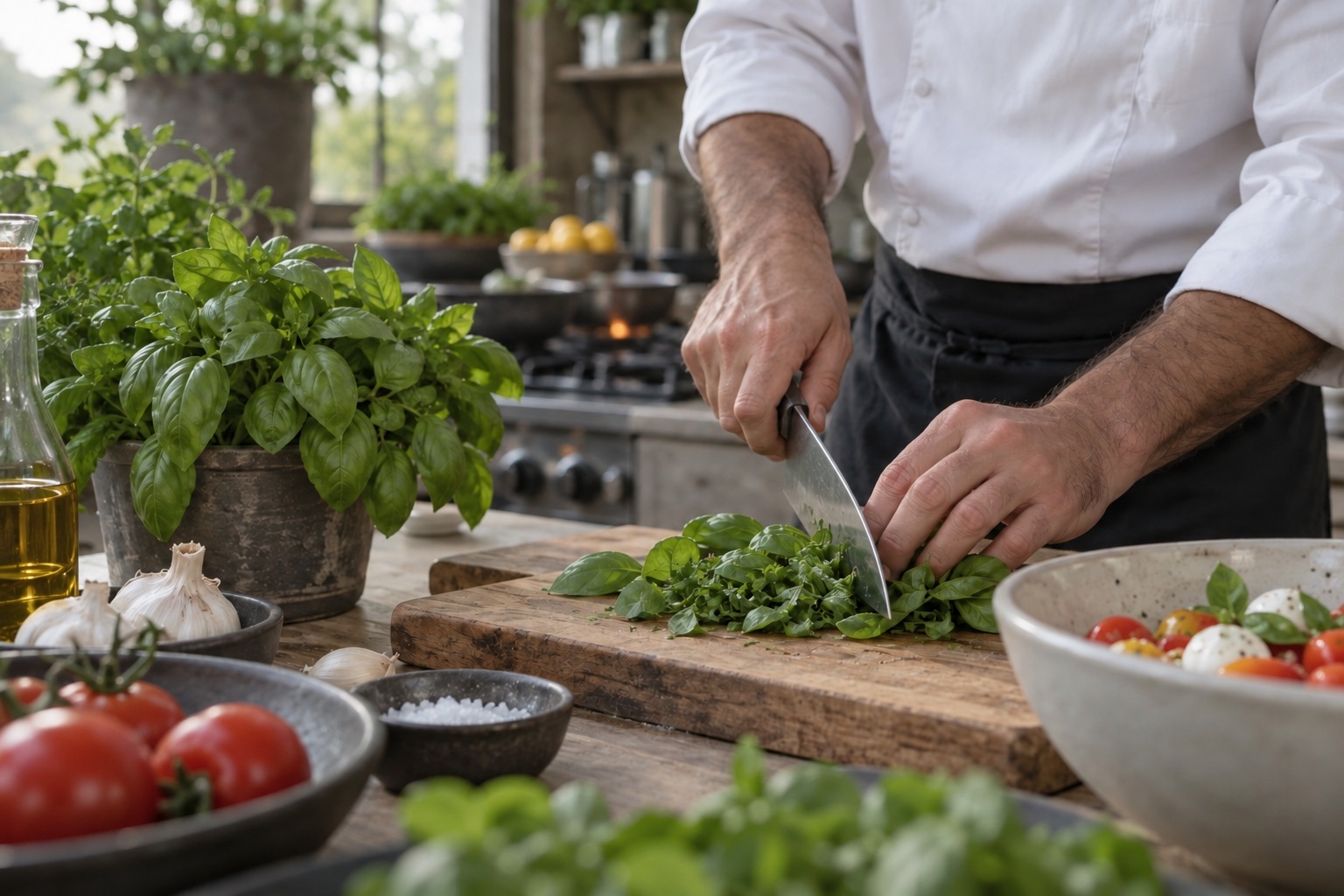
Hands preparing fresh herbs in a restaurant kitchen

YOUR SPACE, YOUR CROP

A small change.
Many ways to grow.

From the kitchen counter to a whole village.

The closed loop and the growing systems are the same; what changes is the scale of the modular installation. Four formats to suit the need. The specific models —capacity, footprint, spec sheet— are published once they've been measured.

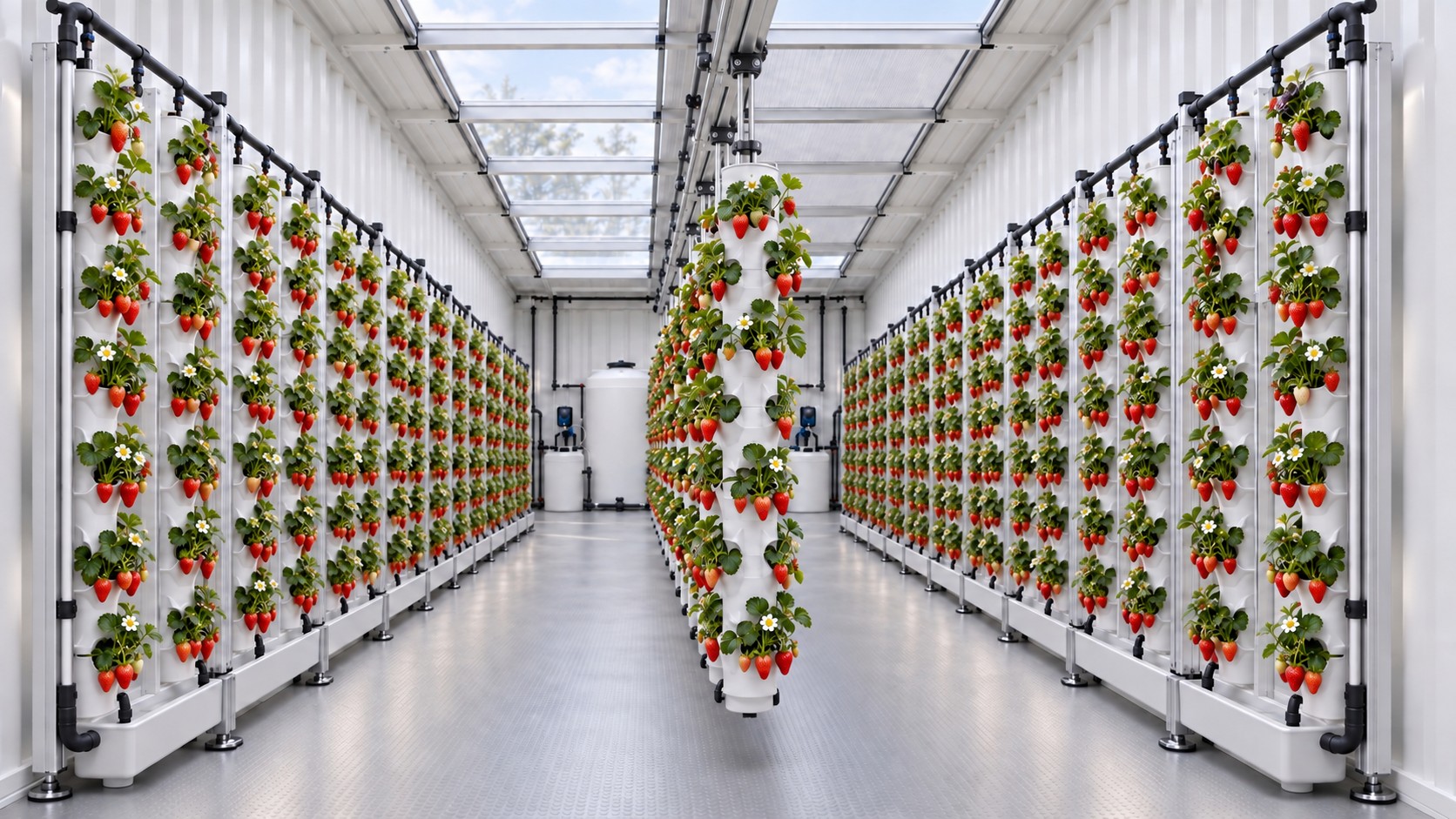
Vertical growing towers in white plastic, suspended from overhead rails.
Two growing sides. One shared water and nutrient system. · Conceptual interior
HU-01

Home

Your next salad starts at home.

For a home kitchen. Fresh herbs and leaves all year round, a step from the chopping board. No more buying a bag of basil to use half of it.

est. electricity use≈ 1.5–2 kWh/day
water vs. soil−85…95%
Let’s talk about your project
HU-02

Restaurant

Your freshest ingredient is a few steps away.

For a professional kitchen that wants to cut to order at the pass. Steady, traceable leaves, herbs and fruit, with no transport or cold-store loss. Flavour picked metres from the table.

est. electricity use≈ 5–8 kWh/day
water vs. soil−85…95%
Let’s talk about your project
HU-03

Small grower

Grow close to the people who buy from you.

For those who sell. Batches of leaves, herbs and fruit for market and local shops, with minimal water cost and production all year round.

est. electricity use≈ 10–18 kWh/day
water vs. soil−85…95%
Let’s talk about your project
HU-04

Village

A harvest that brings a whole village closer.

A large modular installation to supply a whole village. The pack can include the distribution and sales system: residents buy top-quality produce well below supermarket prices.

electricity usedepends on size
water vs. soil−85…95%
distribution + salesoptional in the pack
Let’s talk about your project

LOCAL PRODUCTION, CONNECTED

A local network.
Shared coordination.

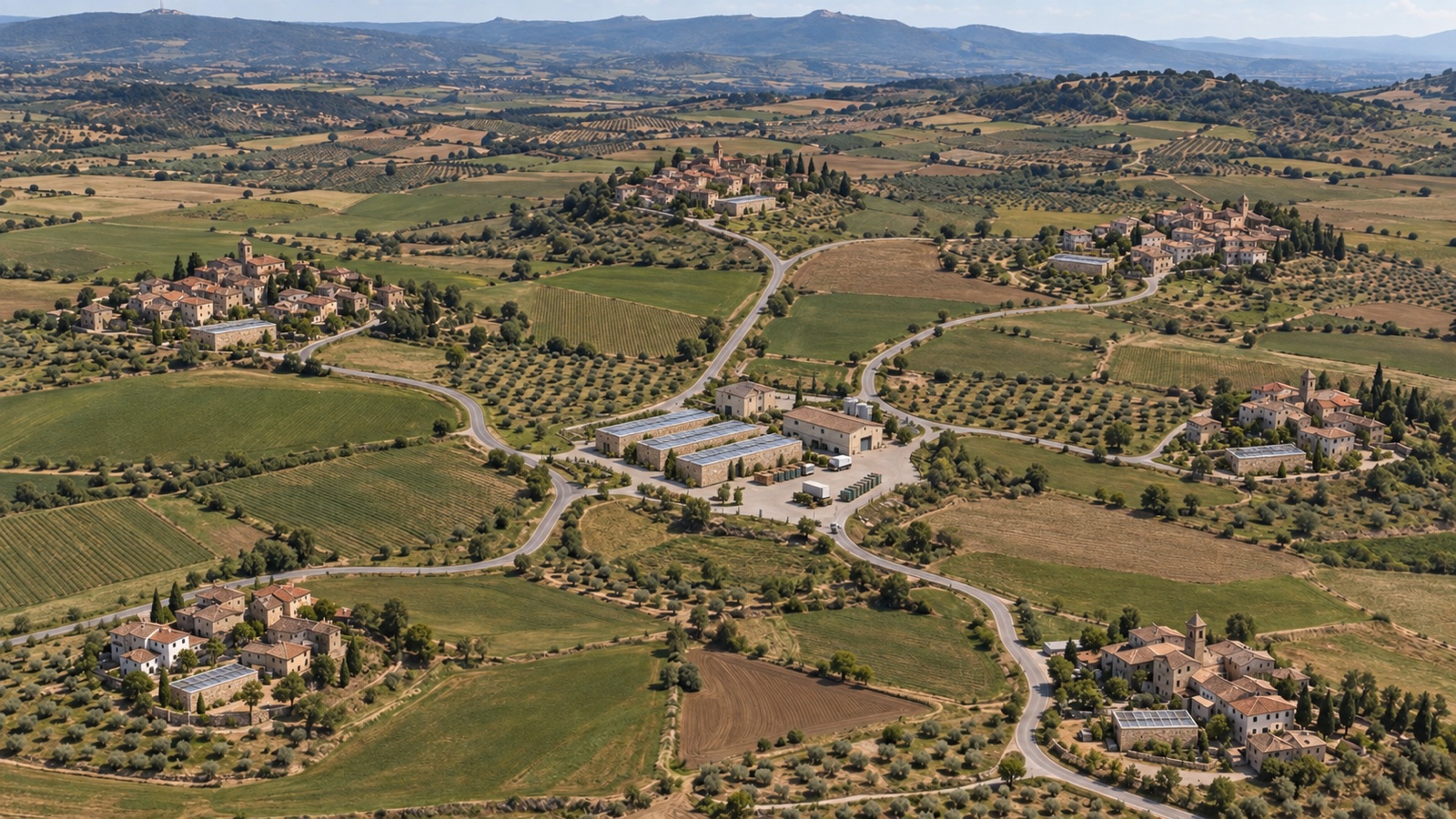
Conceptual village network with glass-roofed growing containers clad in local stone.

FIG. 2 — VILLAGE NETWORK. Each cluster has its own Huertify unit; a central installation coordinates and supplies them. The village produces as a network, not from a single point.

One harvest. Several nearby villages.

The hub shown at the centre of the image sits near a village and brings together growing, order preparation and local delivery. Produce harvested in the morning can be sorted by destination and delivered to shops, restaurants and collection points in several nearby villages that same day. Short routes and orders planned before harvest make this possible; the service area and schedules are adapted to the distances and needs of each network.

Electricity use is a market estimate for equivalent systems; the measured figure for each Huertify installation is published with its method. LED lighting is the bulk of the cost — with good natural light, it drops. The closed-loop pump, running intermittently, adds barely anything.

From harvest to plate

Fresh veg doesn't travel. It's already here.

Freshness starts at harvest. Cooling, packing and transport shape the journey to the shelf. Its duration depends on the crop and the route. Beside the kitchen, you can pick what you will eat today.

FARM TO SUPERMARKET · EUROPE

Farm

EXAMPLE DAY0simulation, not a measured average
Farm
harvest
Day 0
Storage
cold room
Day 2
Washing
and sorting · where applicable
Day 3
Packing
preparation
Day 4
Transport
cold chain
Day 7
Distribution
logistics platform
Day 10
Supermarket
retail shelf
Day 14

Illustrative 14-day timeline, retaining the original page’s stages. These days are invented for the animation, not measured European averages. Steps may overlap or occur in a different order; washing depends on the crop and presentation.

Seven stages, from the farm to the supermarket shelf.

FRESHNESS, WITHOUT THE JOURNEY

From crop to plate.
The very same day.

Channel
Huertify
Table
same day

With Huertify · two steps · 0 days. No warehouse, no transport, no shelf.

SupermarketDuration varies with crop, origin and logistics
Market / localProximity alone does not establish the harvest date
Huertify · next doorHarvest and eat the same day when grown beside the kitchen

The Spanish ministry’s lettuce value-chain study describes the route through a packing centre, distribution platform and supermarket. We use it to explain the route, not to assign durations. Storage life does not establish the time since harvest.

Source: MAPA · lettuce value chain (2012), pp. 23, 30–34

EVERY DROP COUNTS

Water does not end here.
It starts again.

Nutrient-rich water circulates, feeds the roots and returns to the tank filtered. Whatever the plant doesn't take up is reused. The system tops up; it doesn't squander.

traditional system the water is lost CLOSED LOOP Growing channel roots Filter + return Tank water + nutrients Pump delivery

FIG. 1 — CLOSED LOOP. The dotted line marks where the water would be lost in a traditional system; here it returns to the tank.

01 / ReservoirWater + nutrients
02 / PumpFeeds the circuit
03 / Growing channelNourishes the roots
04 / FilterWater returns

Growing systems

Each plant, its own system.

We don't force every vegetable through the same channel. Huertify has four growing systems, each the best fit for a family of plant. That's why things grow well here that don't in other set-ups: from leaf to tuber. Strawberries and tomatoes are among our best results.

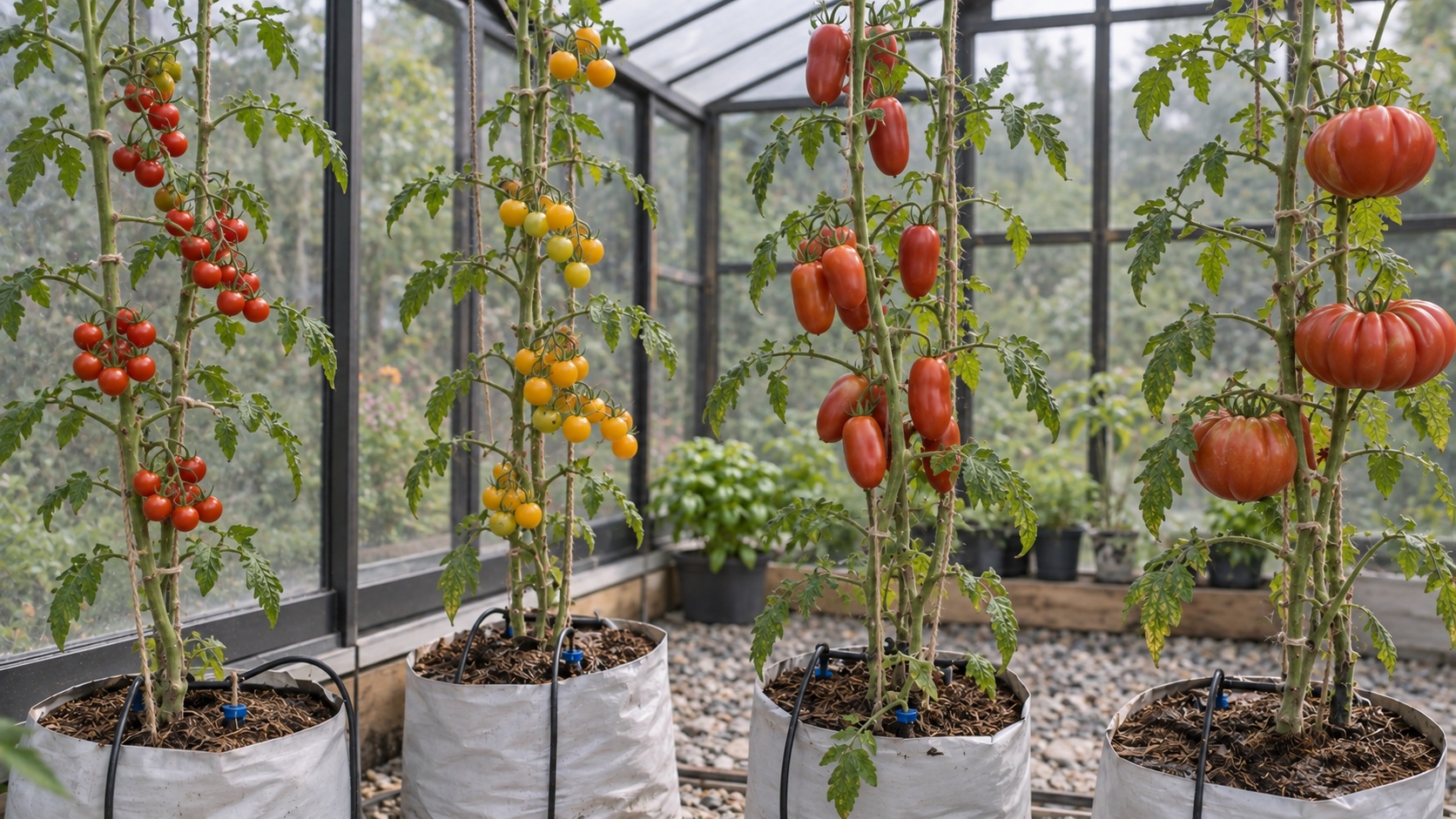
Tomato varieties on lightly pruned vines in soft natural light.
FROM LEAF TO FRUIT · CONCEPTUAL IMAGE GENERATED WITH AI
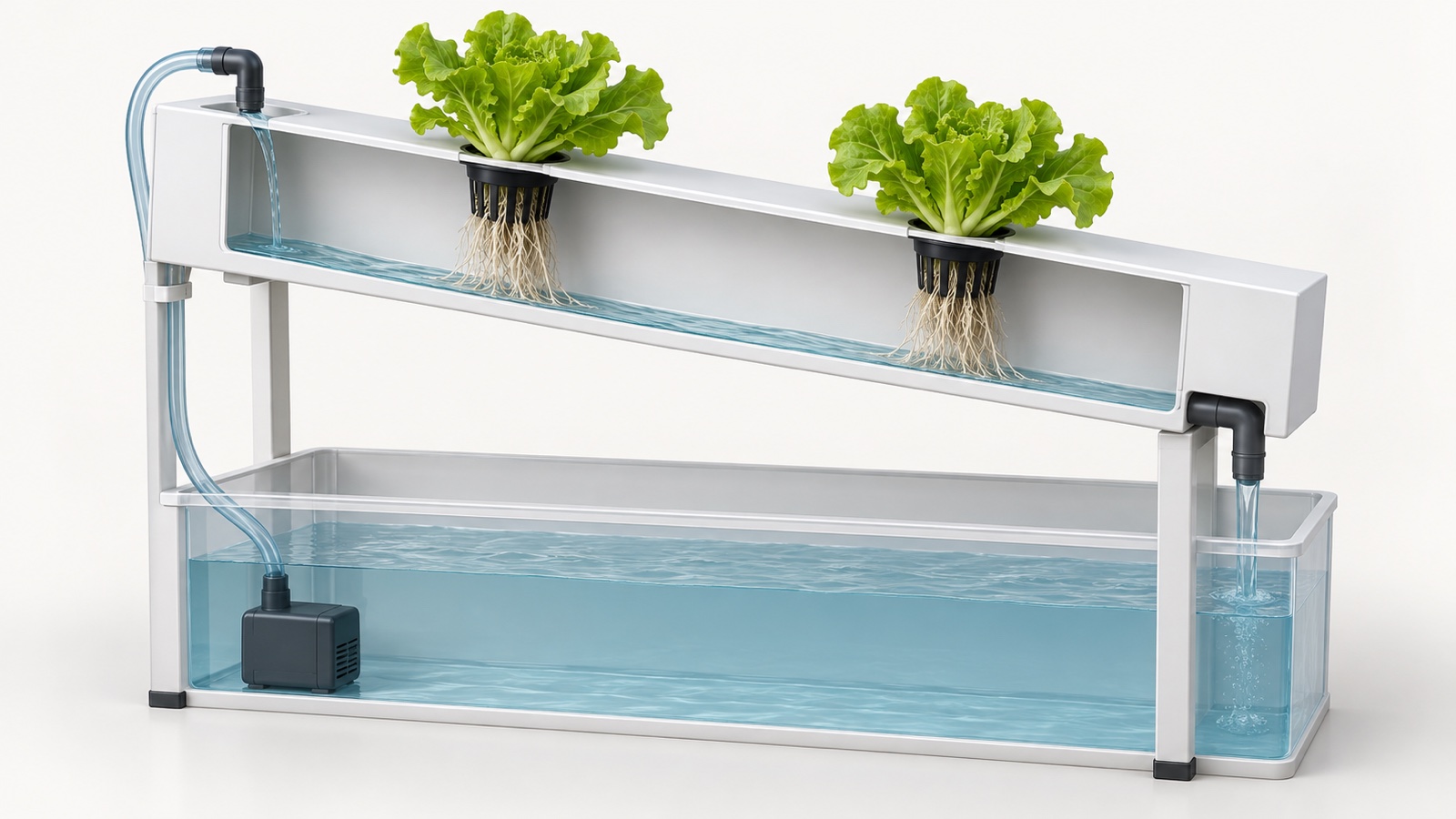
3D cutaway: roots touch a thin nutrient film inside a channel, connected to a reservoir and pump.
A thin nutrient film flows beneath the roots.
SC-01

Nutrient film · NFT

Leaves and herbs: lettuce, spinach, chard, rocket, basil, parsley, coriander, mint.

circulating nutrient film · short cycle, continuous harvest
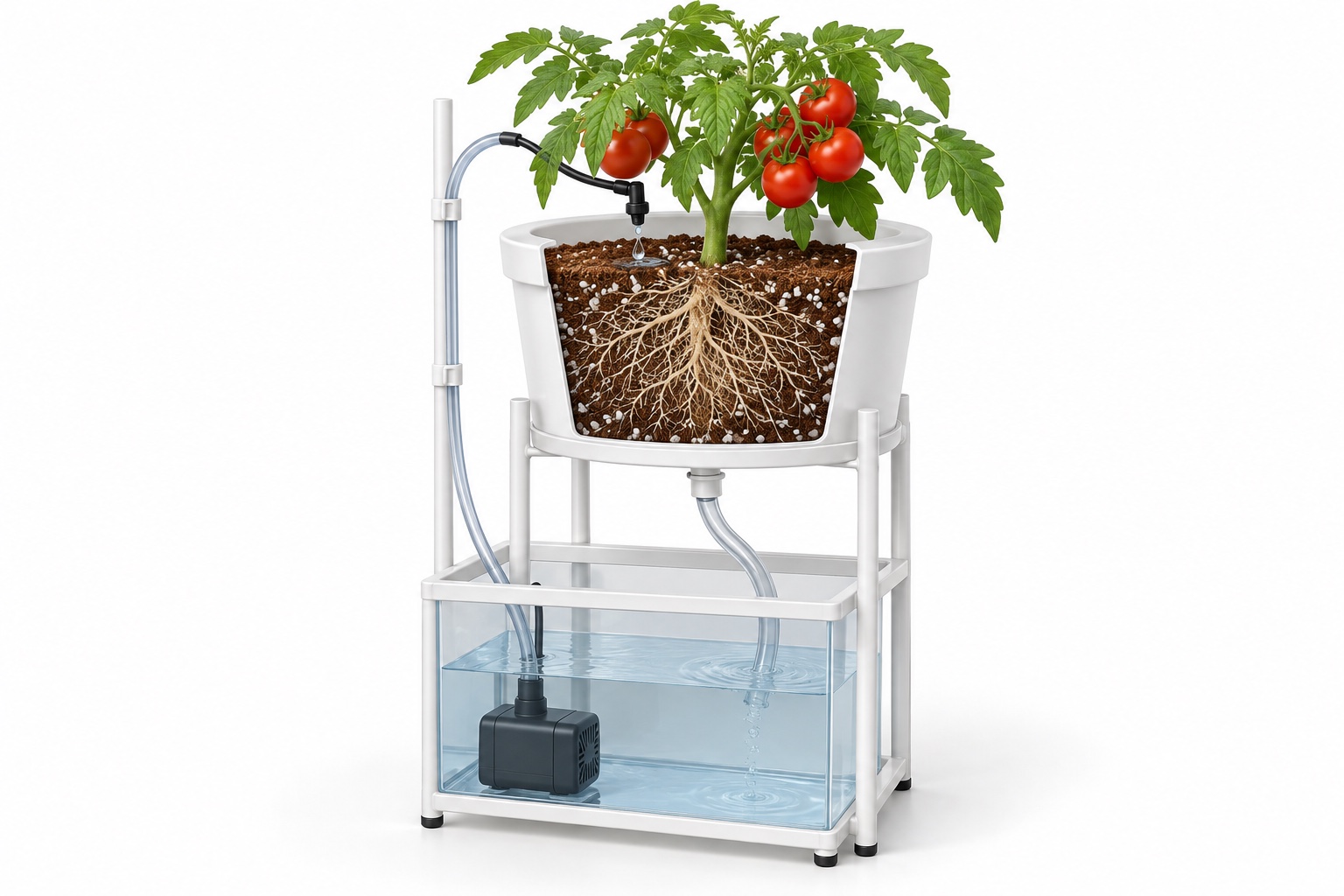
An emitter feeds the growing medium at the roots.
SC-02

Drip on substrate Top

Tall fruiting plants: tomato, pepper, cucumber.

drip + substrate · large root system, high nutrition
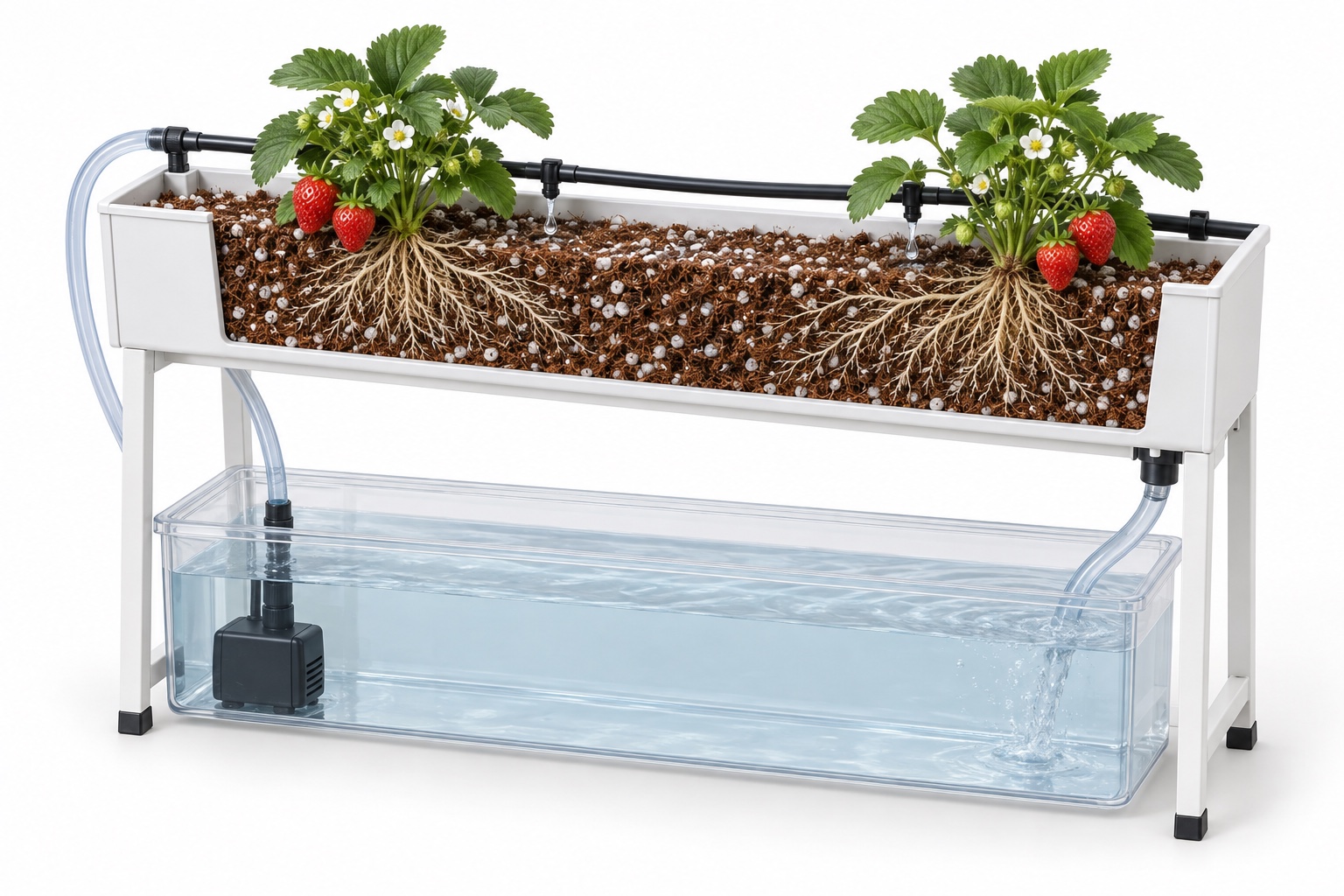
Drip irrigation feeds a substrate-filled raised channel.
SC-03

Raised channel + drip Top

Strawberries and trailing fruit, in a raised channel.

raised channel + controlled drip · one of our best yields
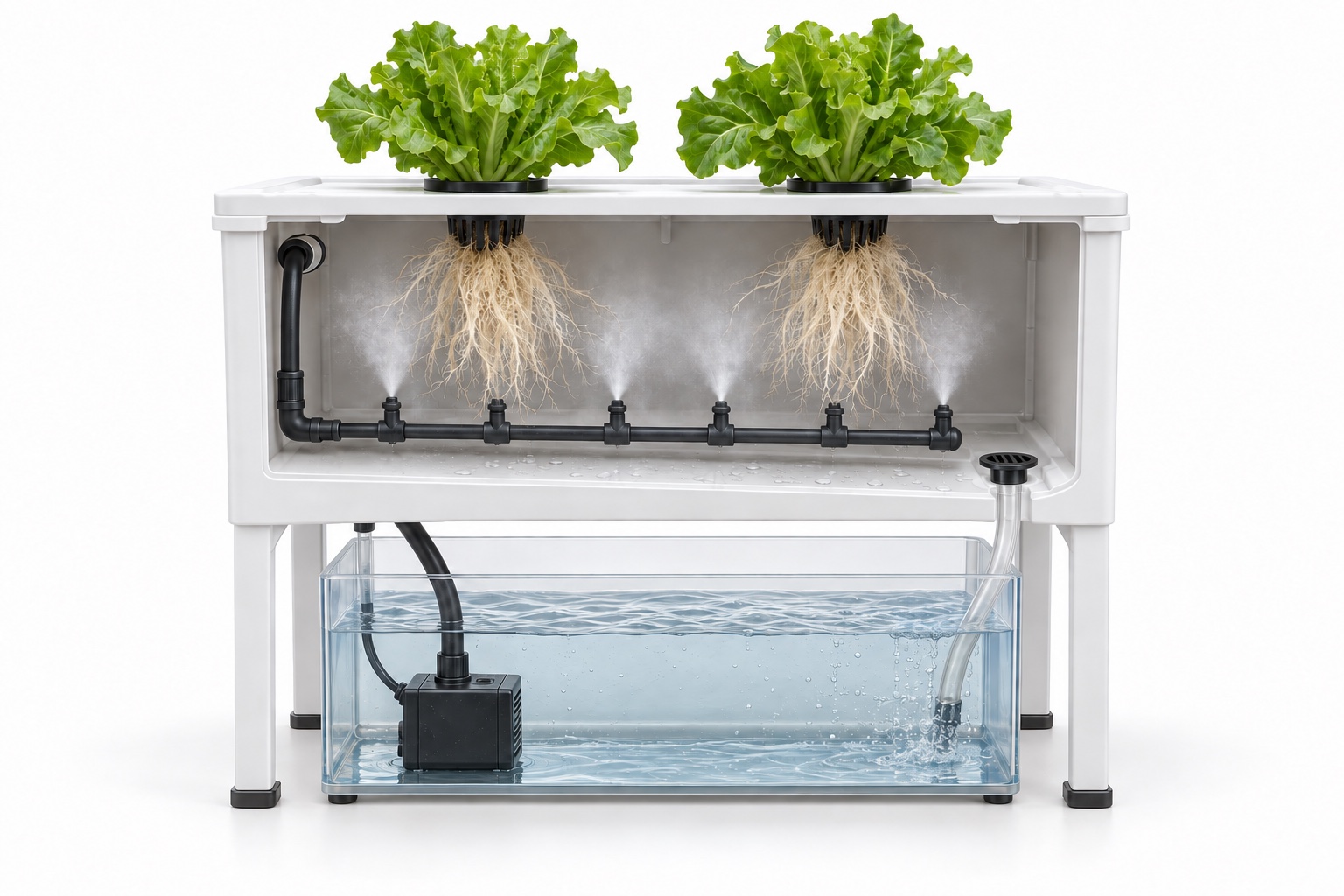
Nutrient mist reaches roots suspended in air.
SC-04

Aeroponics

Roots and tubers: potato, carrot; and cutting propagation.

roots in air · nutrient misting

Conceptual 3D cross-sections showing how each system works.

We choose the growing system according to what you want to produce; you can combine several in one installation. Specific varieties and yields are provided with the unit.

GROWING WITH HUERTIFY

What growing looks like
day to day.

Huertify regulates watering, nutrients and climate. You choose what to grow and follow the plants through these three main tasks.

Your part

  1. Choose what you want to grow

    Pick your crops. Huertify assigns them to the appropriate growing system.

  2. Move the young plants

    Transfer the trays from germination to the growing area when they are ready.

  3. Harvest when it is ready

    Engineering Deck lets you know when to pick. Cut what you need, when you need it.

Each unit’s manual explains maintenance and replenishment tasks.

Retrofitting

The traditional, made better.

We're not here to replace the field, but to improve it. We also retrofit traditional growing systems, keeping the best of both worlds: soil and sun where they already work, precision and savings where they're needed. It adapts to what's there; it doesn't force you to start from scratch.

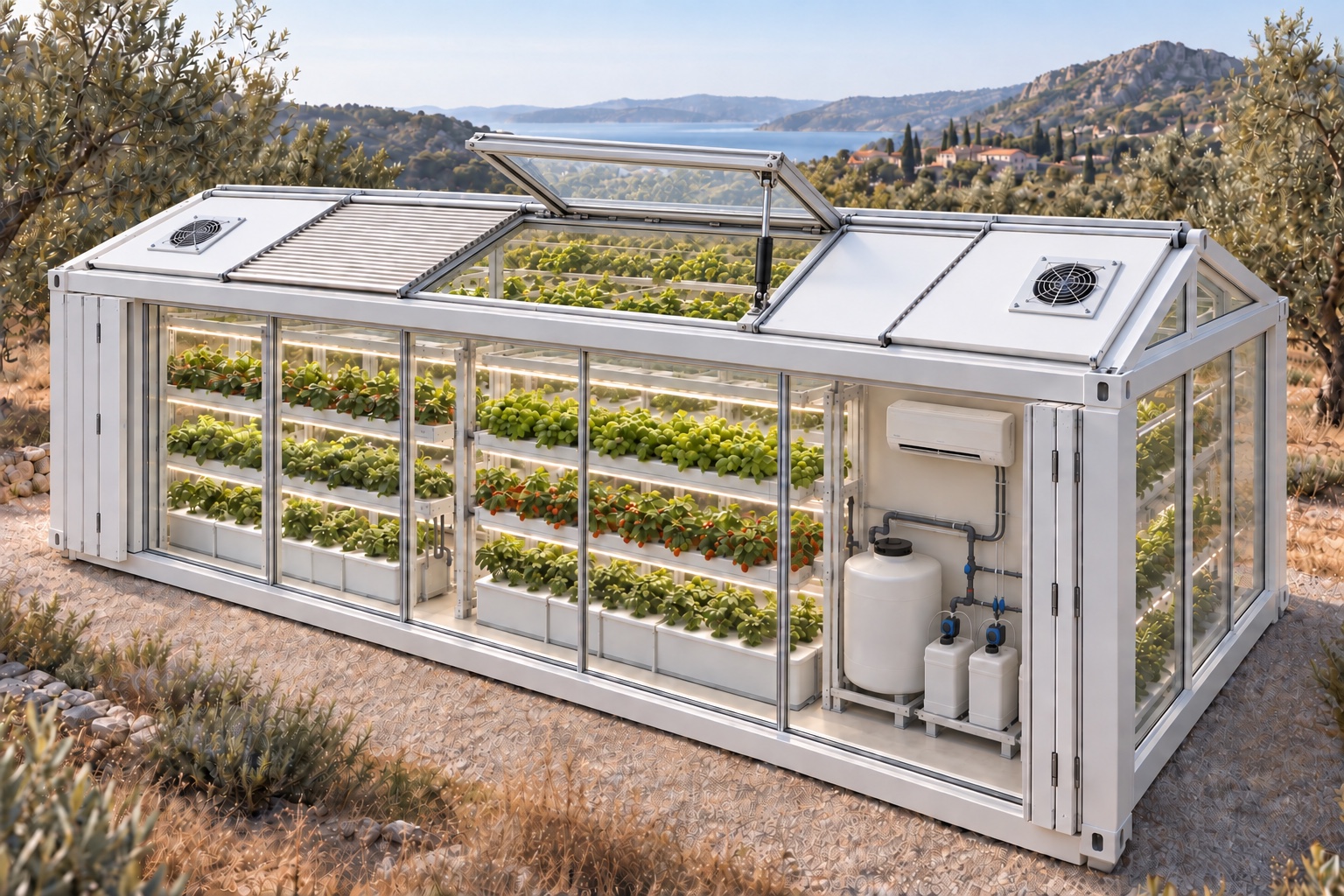
Conceptual container with folded opaque exterior doors, a closed glass facade, ventilation on fixed panels and a technical bay with air conditioning and tanks.
Natural light, controlled shade and supplemental LEDs · conceptual visualization

Solar light control

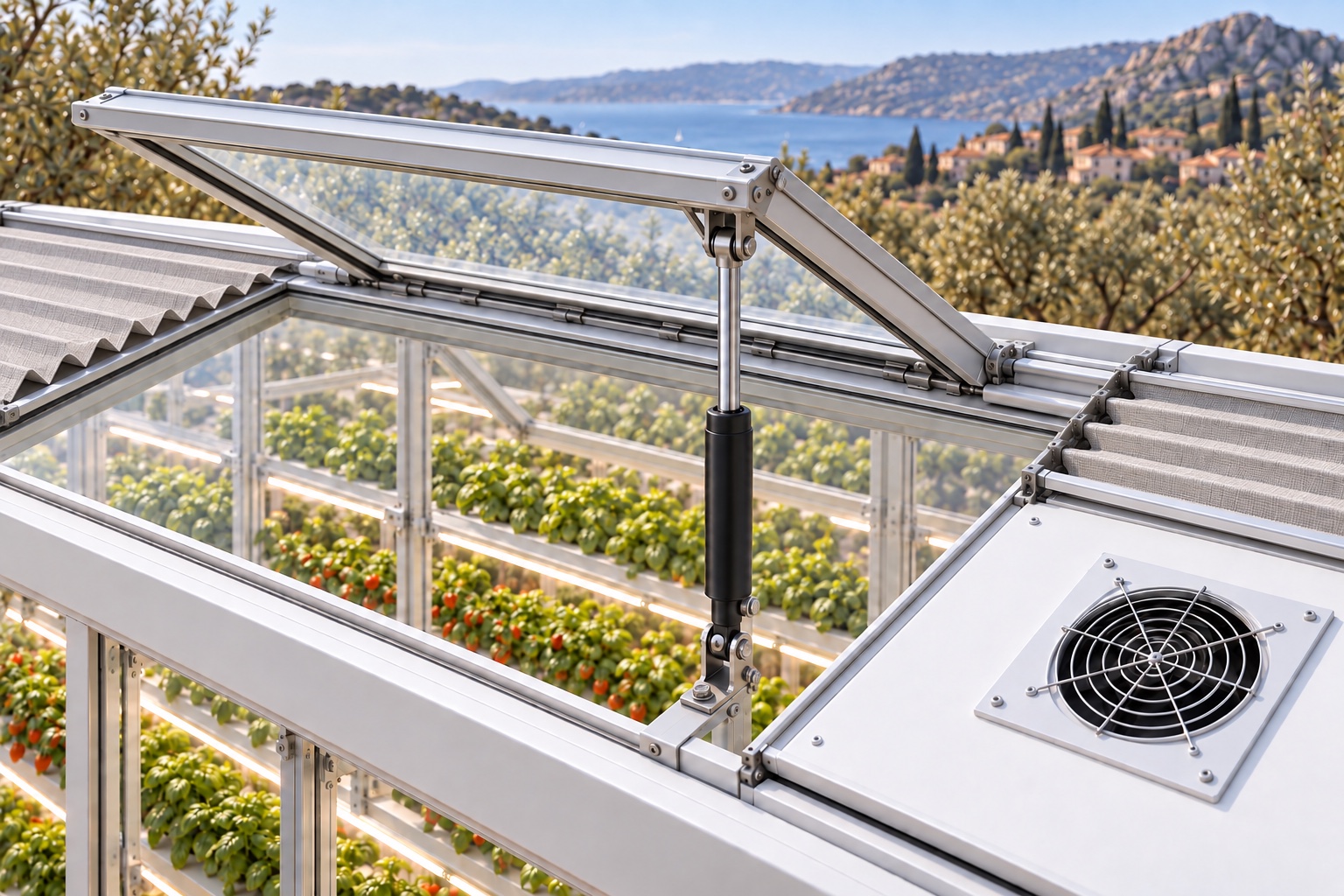
In sunny areas, we integrate a light-control system that makes the most of the sun and only tops it up with LED when needed. More sun used, a smaller bill — without giving up year-round production.

Roof window with connected actuator and accordion folding blind.
Roof window and adjustable shade · conceptual detail

ENGINEERING DECK

You see growth.
The system sees the rest.

The software that runs Huertify is built specifically for the system. It's not a thermostat with an app: it's the installation's command bridge, and it makes it possible to produce on demand, out of season and without waste.

huertify / deckDEMO · ILLUSTRATIVE DATA

Your crop, at a glance

Example crop status
BasilGrowing
RocketReady
LettuceGrowing

Growing environment

Temperature
22,4 °C
Humidity
64 %
pH
6,1

Harvest example: rocket today; basil in 4 days. Not guaranteed growing times.

Interface concept. Illustrative data, not live telemetry.

MOD·01

Stock control

What you have, at what stage and how much is going out, in real time. Every tray traced from seed to cut.

MOD·02

Forward sales

Customers reserve a harvest by choosing specific crops before they're sown. You produce what's already sold — zero surplus.

MOD·03

Climate control

Out-of-season produce, all year round, with no more electricity or water use than in season. The climate is adjusted, not forced.

no extra energy cost
MOD·04

Engineering Deck · vision

Cameras and thermal cameras track growth automatically. The system detects and corrects before a problem is visible to the naked eye.

camera + thermal · automated

Support

What can be fixed, gets fixed.

OPEN MANUAL

Every unit ships with a complete repair manual. No sealed boxes.

NAMED PARTS

A parts list with named suppliers. You can buy them from Huertify or from a qualified equivalent.

CONSUMABLES

Nutrients with published formula and dosage. No brand lock-in.

SERVICE PLAN

Optional, cancellable and separate from the equipment's basic warranty.

Transparency

Every claim, with its method.

We don't make plant growth depend on an app. The monitoring electronics speed things up and fine-tune them, but the plant doesn't rely on them. The only subscriptions are consumables —nutrients, with published formula and dosage— and an optional service plan, cancellable and separate from the equipment warranty.

commitment .. measure every unit and publish its spec sheet, dated
the sheet ... water/cycle · method · nutrients · parts
when ........ as each unit is measured, not before
meanwhile .. we describe the method; we don't publish a figure without measurement behind it

This is the publishing standard, not a figure in progress. The measured spec sheets will appear here as units come online; until then, we'd rather not give a number before we can stand behind it.

Get involved

Grow the village garden — with your institution or your capital.

Two ways to join Huertify: bring a hub to your village or institution, or invest in a project that measures first and scales later.

Villages & institutions

A service for your village

A hub that produces and delivers to the region: fresh vegetables for the elderly, a service for councils, care homes and schools, and local jobs. Short chain and low water use.

Contact us

Investors

De-risk first, scale later

Rural food infrastructure with proprietary software, low capex and a fit with rural-depopulation funding. See the project, the plan and how to take part.

See the project →

Quercus Project: reforestation with native stock →

Contact

What if fresh food
grew beside you?

What do you want to grow, and who for?

Tell us about the space, the scale and what you'd like to grow. The more specific you are, the better we can guide you — with honesty about what fits and what doesn't.

Home
Restaurant
Small grower
Village
Institution

Or email us directly at modular@huertify.com

Notes

  1. Reference range for the sector for closed-loop hydroponics versus growing in soil; the FAO reports water savings of up to 90% in soil-free growing. It is the system's starting point; the specific figure for each Huertify unit is measured and published with its method.
  2. Agriculture accounts for around 70% of the world's fresh-water withdrawals. Source: FAO.
  3. Spain is among the most water-stressed countries in Europe (World Resources Institute, Aqueduct Water Risk Atlas; European Environment Agency); across large areas, extraction exceeds aquifer recharge.